For most of the year, Málaga is a Mediterranean city of museums, beaches, terraces and relatively relaxed evenings. Then August arrives, the fair lights are switched on and the city changes character almost overnight.
The Málaga Fair, known locally as the Feria de Málaga or Feria de Agosto, is the city’s largest annual celebration. For just over a week, music fills the historic centre during the day, while the Real de la Feria becomes a brightly illuminated town of casetas, concerts, food stalls and fairground rides after sunset.
It is not simply a party for tourists, nor is it a carefully preserved folkloric performance. The feria is crowded, noisy, occasionally chaotic and deeply local. Families, groups of teenagers, grandparents, musicians, horse riders and visitors all share the same celebration, although not always in the same place or at the same time.
The result is effectively two different fairs in one city: the daytime fair in the historic centre and the larger fairground at Cortijo de Torres, generally known as el Real.
Málaga Fair 2026: dates and essential information
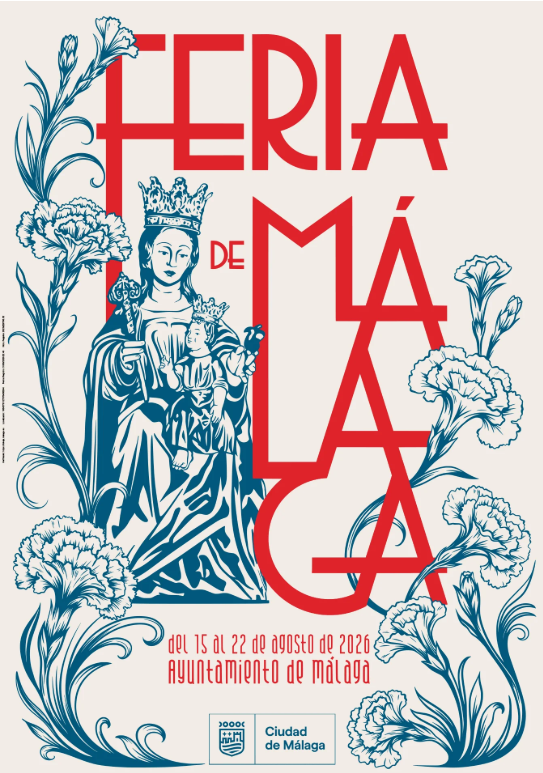
The Málaga Fair 2026 will take place from Saturday 15 August to Saturday 22 August, both dates included. The city has also confirmed that organised fair activities and outdoor music in the historic centre will finish at 18:00 each day, as in previous editions.
Why is the Málaga Fair celebrated?
The origins of the Málaga Fair go back to one of the most important and difficult chapters in the city’s history.
The fair commemorates the incorporation of Málaga into the Crown of Castile following the conquest of the city by the Catholic Monarchs in 1487. After a long siege, Ferdinand and Isabella entered Málaga on 19 August 1487, a date that remains central to the official calendar of the feria.
The first commemorative celebrations were religious and civic events rather than anything resembling today’s enormous urban fair. Over the centuries, the festival changed location, size and character, eventually developing into the combination of street celebration, traditional music, food, dancing, casetas and fairground attractions that visitors see today.
Like many historic European festivals, its origins are connected to a contested historical event. Modern Málaga, however, experiences the feria less as a recreation of the conquest and more as an annual celebration of the city itself: its music, neighbourhood associations, families, food and distinctive way of occupying the streets.
The historical date has not disappeared, but for most people attending the fair, the feria is about meeting friends, dancing, eating, taking children to the rides and staying out considerably later than originally planned.
Why is 15 August a public holiday?
The first day of the 2026 fair, 15 August, is also the Feast of the Assumption of the Virgin Mary.
This is a national public holiday throughout Spain, not a holiday created specifically for the Málaga Fair. In the Catholic calendar, the date celebrates the belief in the bodily assumption of the Virgin Mary into heaven. In 2026, it falls on a Saturday.
The coincidence is particularly noticeable in Málaga because the holiday falls during the feria and, in 2026, on its opening day. Consequently, the city will already be in full festive mode, with many people off work and exceptionally busy streets, restaurants and transport services.
Visitors should not assume that everything will be closed. Málaga is a major tourist destination, and many restaurants, bars and visitor-oriented businesses normally remain open during the feria. Nevertheless, individual museums, shops and attractions may operate with special public-holiday hours.
Why is 19 August a holiday in Málaga?
Unlike 15 August, 19 August is a local public holiday in Málaga city.
It marks the entry of the Catholic Monarchs into Málaga on 19 August 1487 and the city’s incorporation into the Crown of Castile. The municipal fair regulations require the annual feria calendar to include this date because of its historical importance.
The Andalusian government’s official list of local holidays confirms 19 August 2026 as one of Málaga city’s two local public holidays for the year. The other is 8 September, the feast of the city’s patron saint, the Virgen de la Victoria.
For visitors, the practical consequence is another exceptionally busy day. Public institutions and many ordinary workplaces will be closed, while the fair, restaurants and entertainment areas will be operating at full intensity.
The daytime fair in Málaga historic centre
The Feria del Centro is the version of the Málaga Fair that most visitors encounter first.
From around midday, the streets surrounding Calle Larios, Plaza de la Constitución and several nearby squares begin to fill with music, decorated fans, colourful dresses and groups moving between bars. Temporary stages host concerts, verdiales, flamenco and other forms of popular Málaga music.
Previous official programmes have used spaces including Calle Larios, Plaza de la Constitución, Plaza de las Flores, Plaza del Obispo and other central squares for performances and traditional entertainment.
The atmosphere is less formal than at some other Andalusian fairs. There is no single entrance, no enclosed fairground and no fixed route that visitors are expected to follow. The celebration spreads through the pedestrian streets of the historic centre and mixes with the city’s normal bars, shops and restaurants.
One moment you may be watching a traditional group performing verdiales; ten minutes later, you may find yourself in a crowded side street where a bar is playing pop music. That mixture is part of the Málaga feria rather than a contradiction within it.
Calle Larios during the fair
Calle Larios becomes the symbolic centre of the daytime feria.
The street is usually covered with shade canopies, an important detail in the August heat, and decorated for the occasion. It is one of the best places to see traditional performances, flamenco dresses and groups arriving for their first drink of the day.
It is also one of the busiest parts of the entire fair.
Visitors who want to take photographs or watch the performances without being surrounded by the largest crowds should arrive relatively early. By mid-afternoon, walking from one end of the street to the other can become slow.
The busiest streets are not necessarily the best places to spend the whole day. Some of the most enjoyable moments happen a few streets away from Calle Larios, where the atmosphere remains lively but it is still possible to order something at a bar without having to fight your way towards the counter.
What time does the fair in the centre finish?
In 2026, organised activities and music in the historic centre must finish at 18:00. This does not mean the centre suddenly becomes empty, nor that every bar closes its doors at six o’clock. It means that the official outdoor fair programme ends and amplified street music must stop.
The limit is intended to give the historic centre a break before the normal evening and nighttime activity begins.
Many visitors use this moment to return to their accommodation, shower, change clothes and eat before travelling to the Real. Attempting to continue directly from a crowded afternoon in the centre to an entire night at the fairground is possible, but it requires considerably more stamina than most guidebooks suggest.
Special train services during Málaga Fair 2026
Travelling by train is one of the easiest ways to enjoy Málaga Fair without worrying about traffic, road closures or finding somewhere to park. For the 2026 celebrations, Renfe has announced a special Cercanías programme with 59,300 additional seats between 15 and 23 August.
In total, more than 1,200 trains will operate during the fair, including 98 special services. Most of the extra trains will run on the C-1 line between Málaga and Fuengirola and the C-2 line between Málaga and Álora, making the service particularly useful for visitors staying along the Costa del Sol or in towns inland from Málaga.
Extra trains on the C-1 Málaga–Fuengirola line
During the evening, trains will leave Málaga approximately every 20 minutes between 9:30 pm and 12:10 am. In the opposite direction, services will depart from Fuengirola every 20 minutes between 10:20 pm and 1:00 am.
These extended evening services will operate from Saturday 15 to Saturday 22 August, both dates included.
There will also be two early-morning trains departing from Victoria Kent station at 5:00 am and 5:40 am every day from 15 to 23 August. These services are particularly convenient for people returning towards the western Costa del Sol after spending the night at the Real de la Feria.
Victoria Kent is the most convenient Cercanías station for the fairground at Cortijo de Torres, located approximately a ten-minute walk from the main entrance.
Extra trains on the C-2 Málaga–Álora line
Visitors travelling towards Cártama, Pizarra or Álora will also have a later option for returning home. A special train will leave Málaga for Álora at 11:40 pm every night from 15 to 22 August.
Renfe will also operate two services that normally run only on weekdays during the weekends of 15–16 and 22–23 August. These trains will depart from Málaga at 5:44 am, with the return service leaving Álora at 6:37 am.
Although the additional trains make travelling during the fair considerably easier, services can become very busy, particularly late at night. Visitors should allow extra time, keep their ticket or travel card ready and check the Renfe Cercanías app before travelling in case of last-minute timetable changes.
The Real de la Feria at Cortijo de Torres
The second half of the Málaga Fair takes place at the Real de Cortijo de Torres, a large purpose-built fairground situated outside the historic centre.
At night, its illuminated entrance, streets of casetas, fairground rides and food stalls create something closer to a temporary city than a conventional festival venue.
This is where you will find the large municipal casetas, live music, dance performances, youth areas, traditional associations, horses, family spaces and the main amusement area. The fairground is divided into different zones, each with a slightly different atmosphere.
Some casetas are designed for families and traditional meals. Others concentrate on concerts, dancing or late-night entertainment. The municipal regulations establish that access to casetas in the family zone must be free of charge, without requiring an invitation or compulsory purchase. Commercial nightlife venues can operate under different admission and age conditions.
This accessibility is one of the most useful differences between Málaga and certain other Andalusian fairs, where many casetas are private. Visitors can walk through the Real, enter many of its public or family casetas and experience the celebration without knowing a local member.
The Real is not only a night fair
People often describe the historic centre as the day fair and the Real as the night fair. This is useful, but not entirely accurate.
The Real can also be visited during the day. Its family casetas may open from noon, and daytime visits provide a better opportunity to see horses, carriages and the more traditional side of the fair without the enormous nighttime crowds. Under the municipal regulations, family casetas must maintain dining areas and serve food into the evening.
For families with young children, an early visit to the Real can be far easier than arriving close to midnight. Temperatures, however, can be intense, so late afternoon or early evening often offers the best compromise.
After dark, the atmosphere changes. The lights become part of the spectacle, the amusement area grows busier and many casetas move from lunch and conversation towards concerts and dancing.
The fairground rides: Málaga’s “cacharritos”
Ask a child from Málaga what they most enjoy about the feria and there is a good chance the answer will not involve history, flamenco or local wine.
It will be the cacharritos.
Cacharritos is the affectionate local term commonly used for the fairground rides. The amusement area at Cortijo de Torres normally includes attractions for almost every age: carousels, bumper cars, mini roller coasters, ghost trains, spinning rides, giant attractions for teenagers and adults, and gentler rides for small children.
There are also the traditional stalls where visitors can try to win stuffed animals, test their aim, hook plastic ducks or spend an impressive amount of money attempting to obtain a prize that would have been cheaper to buy elsewhere.
The exact attractions and prices vary from one edition to another. In previous years, the rides have been concentrated in the south-eastern part of the Real, alongside food stands and recreational games.
Is there a Children’s Day?
The fairground operators traditionally organise a Día del Niño, when some rides offer reduced prices. However, the date and conditions are not identical every year and may take place after the official fair has ended.
Until the 2026 programme confirms it, families should not arrange their visit around an assumed discount day. In previous editions, the City Council has announced the Children’s Day separately, close to the beginning of the feria.
Visiting the rides with children
The Real is family-friendly, but it is enormous and becomes extremely crowded.
Parents should agree on a meeting point as soon as they arrive and make sure children carry a telephone number somewhere secure. A brightly lit attraction may seem like an obvious landmark, but after dark, one flashing ride can look surprisingly similar to another.
It is also worth setting a ride budget before arriving. The entrance to the fairground is free, but each attraction is paid for separately, and the total can rise quickly when visiting with several children.
What to wear to the Málaga Fair
There is no compulsory dress code for the Málaga Fair.
You will see people in flamenco dresses, elegant summer outfits, linen shirts, shorts, trainers and almost everything in between. Visitors do not need to buy traditional clothing to attend, and nobody will consider you underdressed simply because you arrive in ordinary summer clothes.
Nevertheless, clothing forms an important part of the fair’s visual identity, particularly the traje de flamenca.
The traje de flamenca
The flamenco dress is one of the most recognisable pieces of Andalusian clothing.
It normally has a fitted shape through the body, opening into one or more layers of ruffles known as volantes. Polka dots are common, but they are far from compulsory. Modern dresses may be plain, floral, boldly coloured, minimalist or influenced by contemporary fashion.
Typical accessories include large earrings, flowers worn in the hair, combs or decorative peinetas, bracelets and a small shawl known as a mantoncillo. Fans are both decorative and genuinely useful during a Málaga afternoon in August.
Although it appears traditional and almost timeless, the traje de flamenca has continuously evolved. It is a living form of fashion rather than a museum costume, changing in colour, sleeves, fabrics and silhouette from one season to the next. The dress developed from popular Andalusian clothing and became increasingly formalised and fashionable during the twentieth century.
The expression traje de gitana is also widely heard in Spain, but traje de flamenca is generally the more neutral term and the one most international visitors will find easiest to use.
Do many women wear flamenco dresses in Málaga?
Yes, although the Málaga Fair is less rigidly formal than the Feria de Abril in Seville.
In practice, you are likely to see more flamenco dresses at the Real, during traditional events and among organised groups. In the historic centre, they mix with simpler feria-inspired dresses, floral skirts, polka-dot accessories and normal summer clothing.
Some women wear a full made-to-measure flamenco dress. Others use a flower in the hair, large earrings or a colourful shawl to reference the tradition without wearing the complete outfit.
This mixture suits Málaga. The city’s fair has a strong Andalusian identity, but it does not demand that every visitor perform that identity in exactly the same way.
Can visitors wear a flamenco dress?
Visitors are welcome to wear one, provided it is treated as clothing rather than as a comic costume.
A good flamenco dress is carefully constructed and can be heavy, warm and surprisingly difficult to manage in a crowded street. Anyone planning to wear one should practise walking and sitting in it beforehand and choose footwear that can survive several hours on hard pavement.
A flower, earrings, a fan or a simple flamenco-inspired dress can be a more practical option for someone attending for the first time.
What do men traditionally wear?
The traditional male outfit is the traje corto andaluz, associated particularly with horse riders and carriage drivers.
It commonly includes high-waisted trousers, a shirt, short jacket or waistcoat, boots and a wide-brimmed Andalusian hat. At the Málaga Fair, it is most often seen around horses, official riding events and traditional groups.
Ordinary male visitors are not expected to wear it. A light shirt, comfortable trousers or smart shorts and suitable shoes are perfectly acceptable.
The most practical clothing for visitors
Málaga in August is hot, and the centre provides limited relief once the streets become crowded.
Lightweight fabrics such as cotton or linen are preferable. Comfortable footwear matters more than elegance, particularly for anyone planning to attend both the centre and the Real.
New shoes are a bad idea. So are thin flip-flops if you intend to spend hours walking through crowds, dancing or crossing the fairground late at night.
A fan, sunglasses and sunscreen are not decorative extras. They are basic feria equipment.
Music: more than flamenco
Flamenco is present throughout the Málaga Fair, but it is not the only music visitors will hear.
The feria also gives particular visibility to verdiales, one of the most distinctive traditional music forms in the province of Málaga. Groups known as pandas de verdiales perform with violins, guitars, cymbals, tambourines and other instruments, creating a fast, festive sound that is quite different from the solemn image some visitors associate with flamenco.
Previous official programmes have included verdiales on Calle Larios alongside folklore groups, flamenco performances, popular music, pop concerts and DJs.
At the Real, different casetas may be playing entirely different music at the same time. Walking a few metres can take you from sevillanas to reggaeton, from a local choir to a rock concert.
Purists may find the mixture confusing. Most people in Málaga simply call it the feria.
What to eat and drink
Food at the Málaga Fair ranges from traditional dishes to the universal cuisine of large fairgrounds: fried food, burgers, sweets, potatoes, kebabs and churros consumed at hours when sensible people would normally be sleeping.
In family casetas, visitors can usually find dishes such as fried fish, ham, cheese, tortilla, croquettes, grilled meat and portions designed for sharing. Menus vary considerably between casetas.
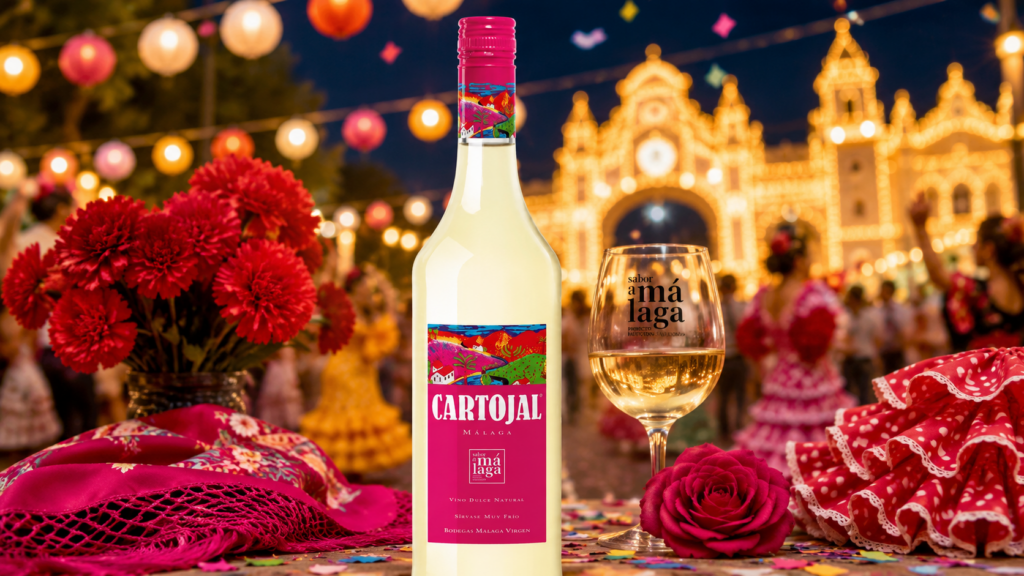
One drink is particularly associated with the Málaga Fair: Cartojal, a sweet Málaga wine usually served very cold. Its pink bottles appear everywhere during feria week. It is easy to drink in the August heat and equally easy to underestimate.
Beer, wine, soft drinks and mixed drinks are also widely available. Rebujito — a combination normally made with fino or manzanilla and lemon-lime soft drink — is strongly associated with Andalusian fairs, although Cartojal has a more specifically Málaga identity.
The most sensible rule is also the least glamorous: drink water regularly. A long afternoon in the centre followed by a night at the Real can involve many hours outdoors in high temperatures.
How to get to the Málaga Fair
The historic-centre fair is easy to reach on foot from most central accommodation. Cercanías trains, the metro and city buses also bring visitors close to the centre.
Getting to Cortijo de Torres requires more planning.
During previous editions, the City Council and EMT have operated reinforced services and special buses connecting the centre with the Real, sometimes through the night. Public transport is officially recommended because of road closures, traffic restrictions and limited access around the fairground.
The exact 2026 special routes and timetables should be checked once the official mobility plan is published.
Taxis are another option, although queues can be considerable at closing times. Travelling to the Real by private car is rarely the easiest choice, particularly for a visitor unfamiliar with the temporary traffic restrictions.
Is the Málaga Fair free?
Yes!!! There is no general admission ticket for either the historic-centre fair or the Real de Cortijo de Torres.
Visitors can walk through the streets, see many public performances and enter family-zone casetas without paying an entrance fee. Municipal regulations specifically require access to family casetas to remain free.
You will, of course, pay for food, drinks, fairground rides and any privately operated activities. Certain commercial nightlife spaces can also have specific admission rules.
Many concerts organised by the City Council are traditionally free, but the 2026 programme should be consulted for individual events.
Is Málaga Fair suitable for families?
Yes, particularly when visited at the right time.
The historic-centre fair is generally more manageable around midday and early afternoon before the largest crowds arrive. The Real offers dedicated family casetas and an extensive fairground area with rides for different ages.
Families with small children may prefer to visit the Real before the main nighttime rush. Teenagers will probably have a different definition of the ideal arrival time.
The greatest practical risk is not that the fair is inherently unsuitable for children, but that it is large, loud and crowded. A simple plan — meeting point, telephone number, ride budget and departure time — makes the experience considerably easier.
Local tips for enjoying the Málaga Fair
Do not try to see everything in one day. The centre and the Real are large enough to be treated as separate experiences.
Visit the historic centre relatively early at least once. You will see more of the traditional performances and spend less time trapped in the densest crowds.
Leave the car at your accommodation whenever possible. Special buses and taxis exist for a reason.
Wear shoes that have already proved themselves.
Eat before you become hungry. At peak times, the most convenient places can have long queues.
Do not feel obliged to drink simply because everyone around you appears to be holding a cup. Feria afternoons are long, hot and deceptively exhausting.
Most importantly, allow the fair to be untidy. The Málaga Fair is not an attraction where every visitor follows the same route. Its personality comes from the collisions: tradition and pop music, flamenco dresses and trainers, families eating lunch beside groups preparing to dance until dawn.
Is the Málaga Fair worth visiting?
The Málaga Fair is worth experiencing, but visitors should know what they are choosing.
This is not a quiet cultural festival. The centre becomes extremely crowded, accommodation prices rise, traffic changes and August temperatures can be difficult. Travellers looking for a peaceful city break may prefer another week.
But for anyone interested in understanding Málaga beyond its monuments and beaches, the feria reveals something essential.
It shows a city celebrating in public. Historic streets become communal spaces, traditional music appears beside modern nightlife, children measure the week in fairground rides and families return to the same casetas year after year.
You do not need a flamenco dress, an invitation or expert knowledge of Andalusian culture. You only need comfortable shoes, some patience and a willingness to let the day develop without too much planning.
That is often when the Málaga Fair is at its best.
Frequently asked questions
When is Málaga Fair in 2026?
The Málaga Fair will be held from 15 to 22 August 2026, both dates included.
Where does Málaga Fair take place?
The daytime fair takes place in Málaga’s historic centre. The main fairground, known as the Real, is at Cortijo de Torres.
What time does the fair in the centre finish?
Official activities and outdoor music in the historic centre will finish at 18:00 in 2026.
Is Málaga Fair free?
There is no general entrance fee. Many performances and family casetas are free to enter, although food, drinks and fairground rides must be paid for separately.
Why is 15 August a holiday?
The 15th of August is the Feast of the Assumption of the Virgin Mary, a national public holiday throughout Spain.
Why is 19 August a holiday in Málaga?
It is a local holiday commemorating the entry of the Catholic Monarchs into Málaga on 19 August 1487 and the city’s incorporation into the Crown of Castile.
Do I need to wear a flamenco dress?
No. Flamenco dresses are an important and visible tradition, but ordinary summer clothing is completely acceptable.
Can tourists wear flamenco dresses?
Yes. Visitors can wear a traje de flamenca, although a full dress can be hot and difficult to manage. Flamenco-inspired accessories are a simpler alternative.
Is Málaga Fair suitable for children?
Yes. The Real has family casetas and an extensive amusement area with rides for children. Visiting before the late-night crowds is usually easier for families.
What are “cacharritos”?
Cacharritos is a common local name for the fairground rides and attractions.
Which is better: the fair in the centre or the Real?
The centre offers a spontaneous daytime street celebration, while the Real has casetas, concerts, horses and fairground rides. They are sufficiently different that experiencing both is recommended.